

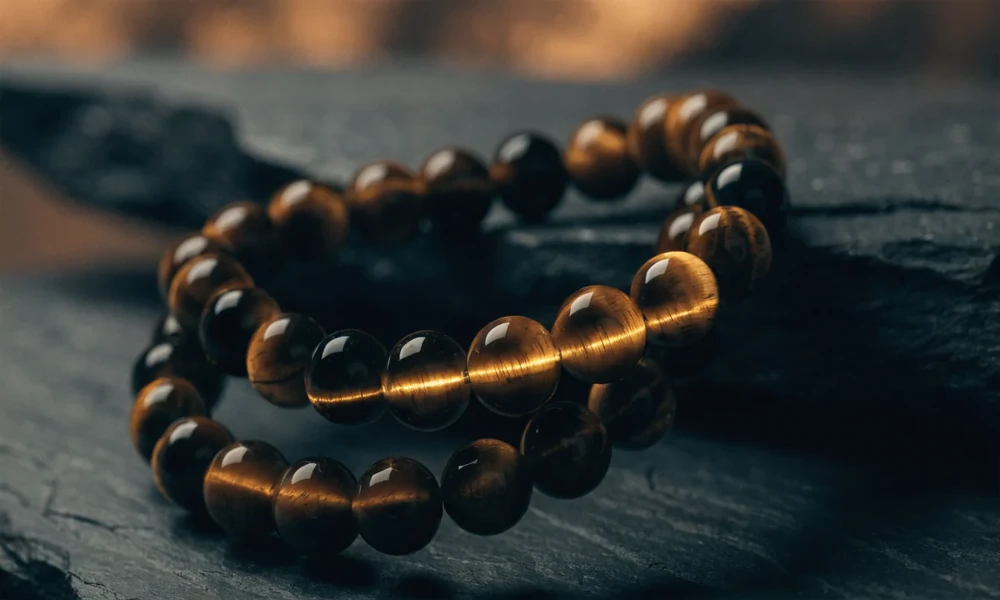
Pick up any crystal bracelet and the first question is usually the same: what does this stone actually do? The honest answer is that crystals carry traditional and spiritual associations, not proven effects. Many wearers find them useful as daily reminders of an intention, a calming ritual or simply a piece of meaningful jewellery.
This guide covers the crystal bracelet benefits most commonly linked to popular stones, who tends to choose them, and how to wear, cleanse and buy them wisely.
What Crystal Bracelet Benefits Really Mean
Benefits here are beliefs drawn from Vedic ratna traditions, chakra work and modern crystal practice. They are not medical or financial remedies. A bracelet will not cure illness or guarantee money. Think of it as a focus object: you wear it, notice it, and it nudges you towards the mood or habit you want.
If you have a health concern, see a doctor. Crystals are complementary at best.
Stone-by-Stone Guide
Amethyst: calm and clarity
A purple quartz linked to the crown and third-eye chakras. Wearers choose it for stress, restless thoughts and meditation. It suits those who overthink or sleep poorly.
Citrine: confidence and abundance
A yellow to golden quartz associated with the solar plexus chakra. Traditionally tied to optimism, motivation and prosperity. Much of the citrine sold cheaply is heat-treated amethyst, which is common and worth knowing.
Rose Quartz: love and self-compassion
Soft pink, linked to the heart chakra. Associated with gentle relationships, forgiveness and emotional healing. Often chosen after a difficult phase.
Black Tourmaline: protection
Dark and grounding, it is the go-to stone for nazar and negative-energy protection. Linked to the root chakra, it suits people who feel drained in crowded or stressful spaces.
Tiger Eye: strength and focus
Golden-brown and banded. Associated with courage, willpower and sound decision-making. Students and professionals often pick it for exams and interviews.
Pyrite: drive and good fortune
Metallic gold, nicknamed “fool’s gold”. Traditionally linked to confidence and business luck. It is brittle, so avoid knocks.
Labradorite: intuition and change
Grey-blue with a flash of colour. Associated with intuition, creativity and navigating transitions.
Lapis Lazuli: truth and expression
Deep blue with gold flecks, linked to the throat and third-eye chakras. Traditionally connected with honest communication and wisdom. Dyed stones and imitations are common.
Turquoise: protection and balance
Long valued across cultures as a protective stone. Dyed howlite is frequently sold as turquoise, so check for suspiciously uniform colour and very low prices.
Fluorite: concentration
Often multicoloured, in green, purple and clear bands. Associated with a tidy mind and study focus.
Moonstone: emotional balance
Milky, with a soft sheen. Linked to the moon, intuition and emotional steadiness. Many associate it with cyclical, reflective energy.
Carnelian: energy and motivation
Orange-red, tied to the sacral chakra. Associated with creativity, warmth and getting started when you feel stuck.
Quick Comparison
| Need | Stones commonly chosen |
| Stress and calm | Amethyst, moonstone, fluorite |
| Money and career | Citrine, pyrite, tiger eye |
| Love and relationships | Rose quartz, moonstone |
| Evil eye protection | Black tourmaline, turquoise |
| Confidence and energy | Carnelian, tiger eye, citrine |
| Spirituality and meditation | Amethyst, labradorite, lapis lazuli |
Which Wrist Should You Wear It On?
There is no single rule. A common tradition says the left hand, nearer the heart, receives energy, while the right hand gives it. So many people wear calming or healing stones on the left and action-oriented stones, such as tiger eye or pyrite, on the right. If you are unsure, wear it on the hand that feels comfortable and does not interfere with work.
Matching Stones to Rashi and Numerology
Some buyers choose by astrology or birth number. Vedic tradition uses ratnas such as Gomed (hessonite), and a qualified astrologer should guide those, since they are worn for specific planetary reasons. Numerology offers a gentler route: each ruling number (1 to 9) has associated stones. Add your birth date digits to find yours. Ankastra offers bracelets by numerology number if you want a starting point.
How to Cleanse and Charge Your Bracelet
- Smoke: pass it through incense or sage smoke.
- Moonlight: leave it out overnight, especially on a full moon.
- Sound: a bell or singing bowl near the stone.
- Intention: hold it and state what you wish to focus on.
Many Indian wearers cleanse and charge on Mahashivratri. Avoid soaking porous or delicate stones such as lapis, turquoise and pyrite in water or salt. Wipe gently with a dry cloth instead, and remove the bracelet before bathing, swimming or applying perfume.
How to Spot Genuine Stones
- Be wary of perfect, identical beads at very low prices.
- Real stones show small natural variations in colour and inclusions.
- Quartz feels cool to touch and stays cool longer than glass.
- Ask the seller about treatment, such as dyeing or heating.
- Know common lookalikes: glass sold as labradorite or opalite, dyed howlite as turquoise, heated amethyst as citrine.
Honest sellers will tell you what is natural, treated or reconstituted.
Pairing Stones Together
Combining stones works best when they share an intention. Amethyst with rose quartz suits calm and emotional healing. Citrine with pyrite and tiger eye leans towards career and confidence. Black tourmaline with turquoise gives a protection-focused set. Avoid piling on too many purposes at once; a bracelet with a clear theme is easier to connect with.
FAQs
Can I wear more than one crystal bracelet?
Yes. Choose complementary intentions and notice how you feel.
How long before I notice anything?
Experiences vary. Many wearers describe a subtle shift in mood or focus over weeks, though this is personal and not guaranteed.
Can anyone wear any stone?
Generally yes for everyday bracelets. For astrological gemstones like Gomed, consult a qualified astrologer.
Do crystals replace medical care?
No. They are complementary and should never replace advice from a doctor.
Conclusion
Crystal bracelet benefits are best understood as traditional associations: amethyst for calm, citrine for confidence, black tourmaline for protection, rose quartz for the heart, and so on. Choose by intention, buy from sellers who are open about authenticity, and cleanse your piece regularly.
If you are still unsure where to begin, browse Ankastra’s bracelets by need or numerology number, or use the free crystal guidance to find a stone that suits your goals.
